Decoding Bonus Mechanics in App-Based Trial Modes for Mapping Outcome Patterns Across Wheel Variants
App-based trial modes allow users to explore bonus mechanics without financial commitment, and these systems record data points that reveal how bonuses activate across wheel variants such as European, American, and French configurations. Developers program the trial environments to mirror live random number generators while logging every spin outcome, bonus trigger, and payout multiplier in structured datasets. Observers note that the trial logs often separate bonus events by wheel type because each variant carries distinct pocket counts and house edge calculations that affect frequency rates.
Core Components of Bonus Activation in Trial Environments
Trial modes embed bonus triggers through scripted probability tables that align with regulatory testing standards, and these tables adjust payout ratios based on wheel segment distributions while maintaining consistent seed values for reproducibility across sessions. Data from trial runs shows that bonus mechanics typically activate after a set number of spins or when specific symbol combinations appear on the virtual wheel, and the system timestamps each event to enable pattern mapping. Researchers compile these timestamps into heat maps that highlight clusters where bonuses occur more often in one wheel variant than another.
App developers integrate multiplier bonuses, free spin rounds, and cashback features that scale according to the chosen wheel type, whereas European wheels with a single zero pocket tend to produce slightly higher bonus frequencies in controlled tests compared to American wheels that include both zero and double-zero pockets. The trial software records every multiplier value and the preceding spin sequence, which allows analysts to trace how bonus triggers correlate with particular number distributions.
Pattern Mapping Techniques Across Wheel Variants
Analysts use the exported trial data to build outcome matrices that compare bonus hit rates across wheel variants, and these matrices incorporate variables such as spin velocity, segment angle, and bonus threshold values. One study revealed that French wheel variants, which include la partage rules, generate distinct bonus patterns because the rule returns half the stake on even-money bets when zero appears, and trial logs capture this mechanic as a separate data field. Mapping software then overlays these fields onto visual charts that display frequency peaks and troughs for each variant.
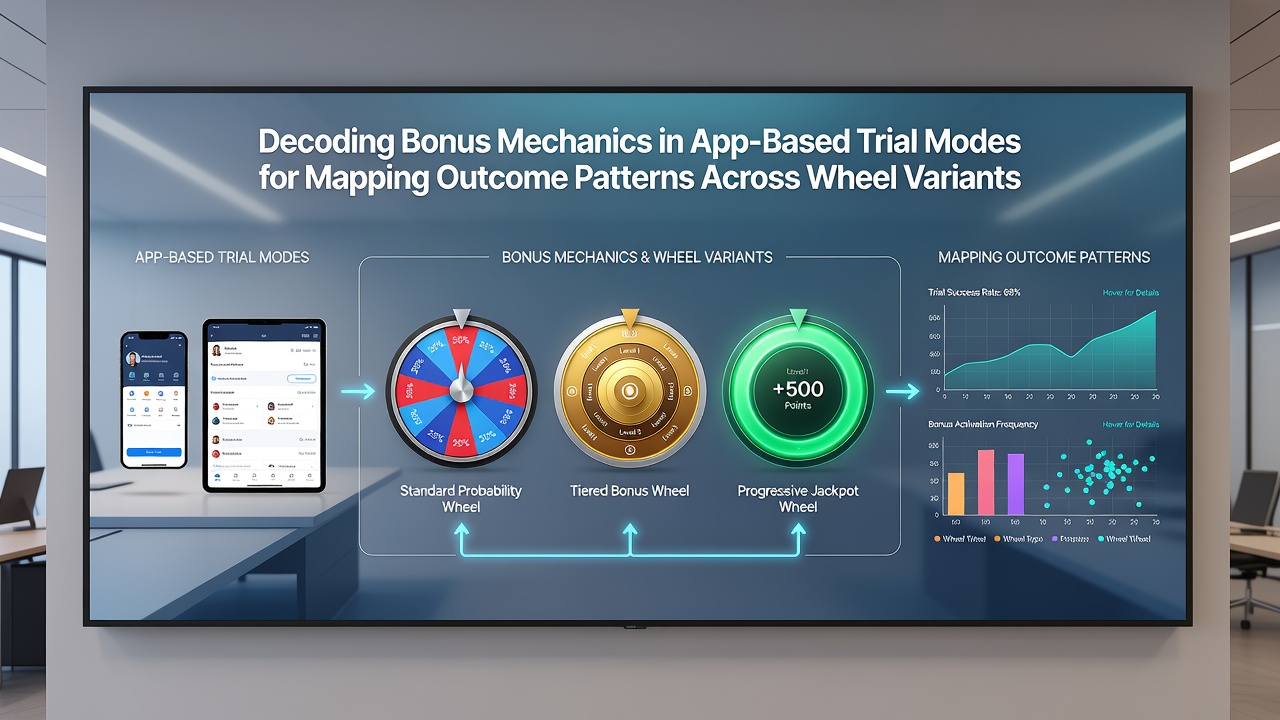
Pattern mapping also tracks how bonus mechanics interact with progressive jackpots that accumulate across multiple trial sessions, and the data indicates that jackpot contributions increase at different rates depending on whether the wheel uses 37 or 38 pockets. Trial platforms store these accumulation curves in time-series formats that researchers later analyze for seasonal fluctuations, including observations recorded during August 2026 when several major apps updated their RNG certification protocols.
Regulatory and Technical Standards Governing Trial Data
Regulatory bodies such as the Alcohol and Gaming Commission of Ontario require trial modes to undergo independent audits that verify bonus mechanics operate within certified probability limits, and audit reports document the exact parameters used for each wheel variant. Alcohol and Gaming Commission of Ontario guidelines specify that trial logs must retain raw outcome data for a minimum period so that pattern analysis remains verifiable. Technical standards from the International Association of Gaming Regulators further require that bonus triggers remain independent of user account status, which prevents trial data from being skewed by prior real-money activity.
University research groups have examined trial datasets to measure how bonus frequency changes when wheel variants switch between single-zero and double-zero layouts, and findings show measurable differences in trigger intervals that developers then adjust in subsequent app versions. These adjustments appear in release notes that list updated bonus tables and the wheel configurations they affect.
Conclusion
Trial mode data continues to serve as the primary resource for decoding bonus mechanics across wheel variants because it supplies complete, timestamped records that live environments rarely expose. Pattern mapping derived from these records helps identify consistent relationships between wheel pocket structures and bonus activation rates, and ongoing updates such as those observed in August 2026 demonstrate how certification bodies refine the standards that govern these systems. The resulting datasets support transparent analysis while preserving the separation between trial exploration and actual wagering activity.