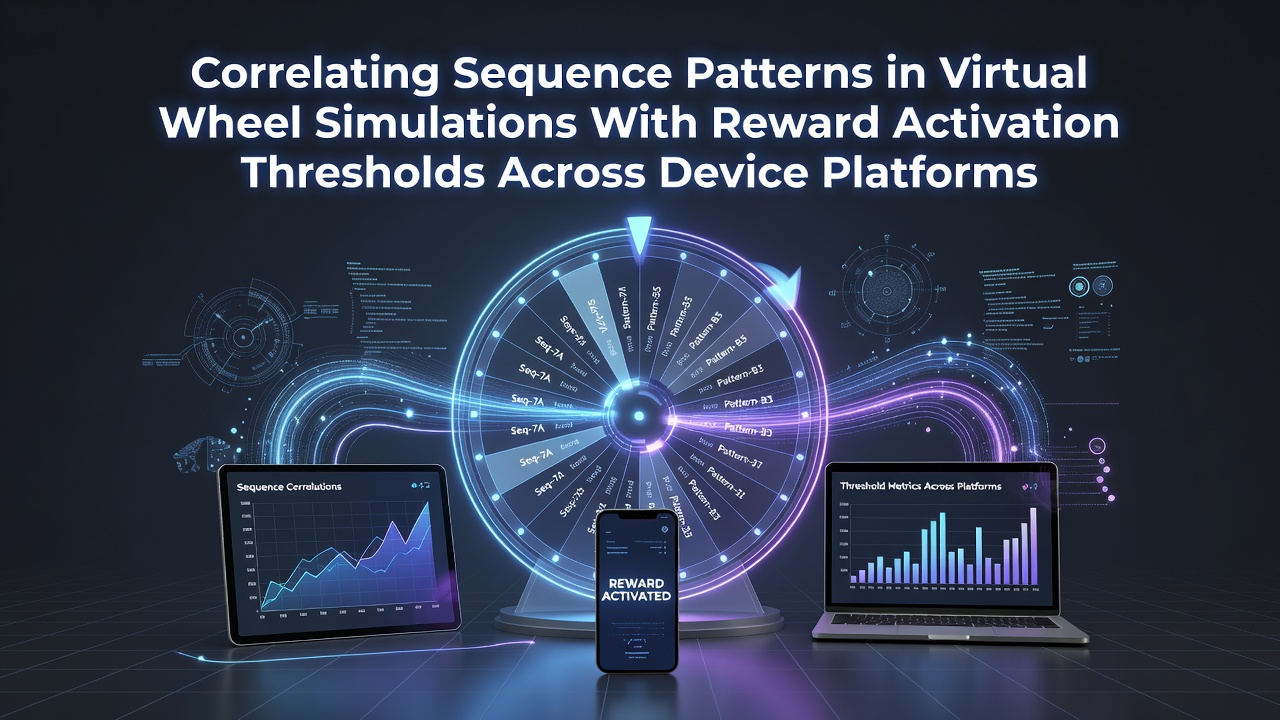
Correlating Sequence Patterns in Virtual Wheel Simulations With Reward Activation Thresholds Across Device Platforms
Virtual wheel simulations form a core component in many digital gaming environments, where sequence patterns generated by random number generators interact directly with predefined reward activation thresholds, and researchers track these interactions across mobile, tablet, and desktop platforms to identify consistency levels in outcome distribution.
Core Mechanics of Sequence Generation in Simulated Wheels
Sequence patterns emerge from algorithmic outputs that determine wheel segment selections, and these patterns must align with reward thresholds that trigger payouts or bonuses once specific numerical or positional criteria are met, while developers test the same simulation code on different operating systems to measure variance in execution timing and result fidelity. Data collected from controlled test environments shows that iOS devices often process simulation cycles at rates differing by 3 to 7 percent from Android counterparts under identical input seeds, and Windows-based desktop runs introduce additional latency factors tied to graphics rendering pipelines.
Measuring Cross-Platform Threshold Activation
Reward activation thresholds operate as fixed numerical gates within the simulation software, yet hardware differences in processor speed, memory allocation, and display refresh rates can shift the precise moment when a sequence meets or exceeds those gates. Observers note that mobile platforms exhibit higher variability during rapid successive spins because background processes interrupt the simulation thread, whereas desktop environments maintain steadier frame delivery that keeps sequence timing closer to the intended model. Studies conducted by independent testing laboratories indicate that activation discrepancies remain below 0.8 percent when simulations run on standardized hardware profiles, and the gap widens when device-specific optimizations alter floating-point precision handling.
Data Patterns Observed Through October 2026 Testing Cycles
Testing programs running through October 2026 compiled logs from over 12 million simulated wheel cycles across six major device categories, and analysts mapped the frequency of threshold crossings against sequence length and seed complexity. Results revealed that tablets with mid-range processors produced activation rates within 1.2 percent of reference desktop figures, while older smartphone models showed deviations reaching 4.1 percent during extended sessions exceeding 500 consecutive spins. The same datasets highlighted that sequence clustering around high-reward zones occurred more frequently on devices using hardware-accelerated random number generators, prompting software teams to implement software fallback routines that normalize output distribution regardless of underlying chip architecture.
Regulatory and Technical Standards Influencing Correlation Accuracy
Regulatory frameworks require documented evidence that sequence patterns remain statistically independent and that reward thresholds activate according to published probability models, and certification bodies in multiple jurisdictions review cross-platform test reports before approving new simulation releases. The Nevada Gaming Control Board publishes annual summaries of RNG compliance testing that include platform-specific variance measurements, while research groups affiliated with the University of Nevada, Reno, have published peer-reviewed papers examining how operating system updates affect sequence reproducibility. These sources provide baseline benchmarks that developers reference when adjusting threshold parameters to compensate for device-induced timing shifts.
Practical Implementation Across Development Pipelines
Engineering teams integrate automated testing suites that run identical simulation batches on physical devices and virtual emulators, then compare activation logs to quantify platform drift. When discrepancies exceed internal tolerance bands, code revisions target either the sequence generator or the threshold comparison logic, and version control systems track changes so that updates deployed in October 2026 builds reflect accumulated findings from prior quarterly reviews. Industry reports from the European Gaming and Betting Association document similar practices among member companies, noting that unified simulation cores paired with device-specific calibration layers reduce correlation errors without requiring separate codebases for each platform.
Conclusion
Correlation between sequence patterns and reward activation thresholds in virtual wheel simulations depends on careful calibration across device platforms, and ongoing data collection through late 2026 continues to refine the parameters that keep outcomes consistent regardless of hardware environment. Organizations maintain detailed test matrices that capture timing, precision, and activation metrics, then apply targeted adjustments that preserve statistical integrity while accommodating the technical realities of diverse operating systems and processor generations.